Founded in 1993 by 15 pioneering national federations, the International Federation of Muaythai Associations (IFMA) embarked on a bold mission: to preserve the traditions of muaythai while elevating it to the highest level of international sport.
At the time, muaythai had no global recognition and was absent from major multi-sport events. IFMA established modern governance while safeguarding the sport's rich cultural heritage, including the Wai Kru, Pi Muay, and Mongkol, creating a safe, respected, and unified international sport.
The journey quickly gained momentum. Muaythai debuted at the Southeast Asian Games in 1995 and the Asian Games in 1998. By 2001, IFMA had expanded to all five continents and officially adopted the single-word spelling "Muaythai," reinforcing its inseparable connection to its birthplace—the Kingdom of Thailand.
A defining milestone came in 2006 when, after two unsuccessful attempts, IFMA earned recognition by the General Association of International Sports Federations (GAISF), marking Muaythai's acceptance as a fully recognised international sport. This achievement received the support and encouragement of His Majesty King Rama X, who praised IFMA's efforts to protect the integrity of Thailand's national martial art while encouraging its continued journey toward Olympic recognition.
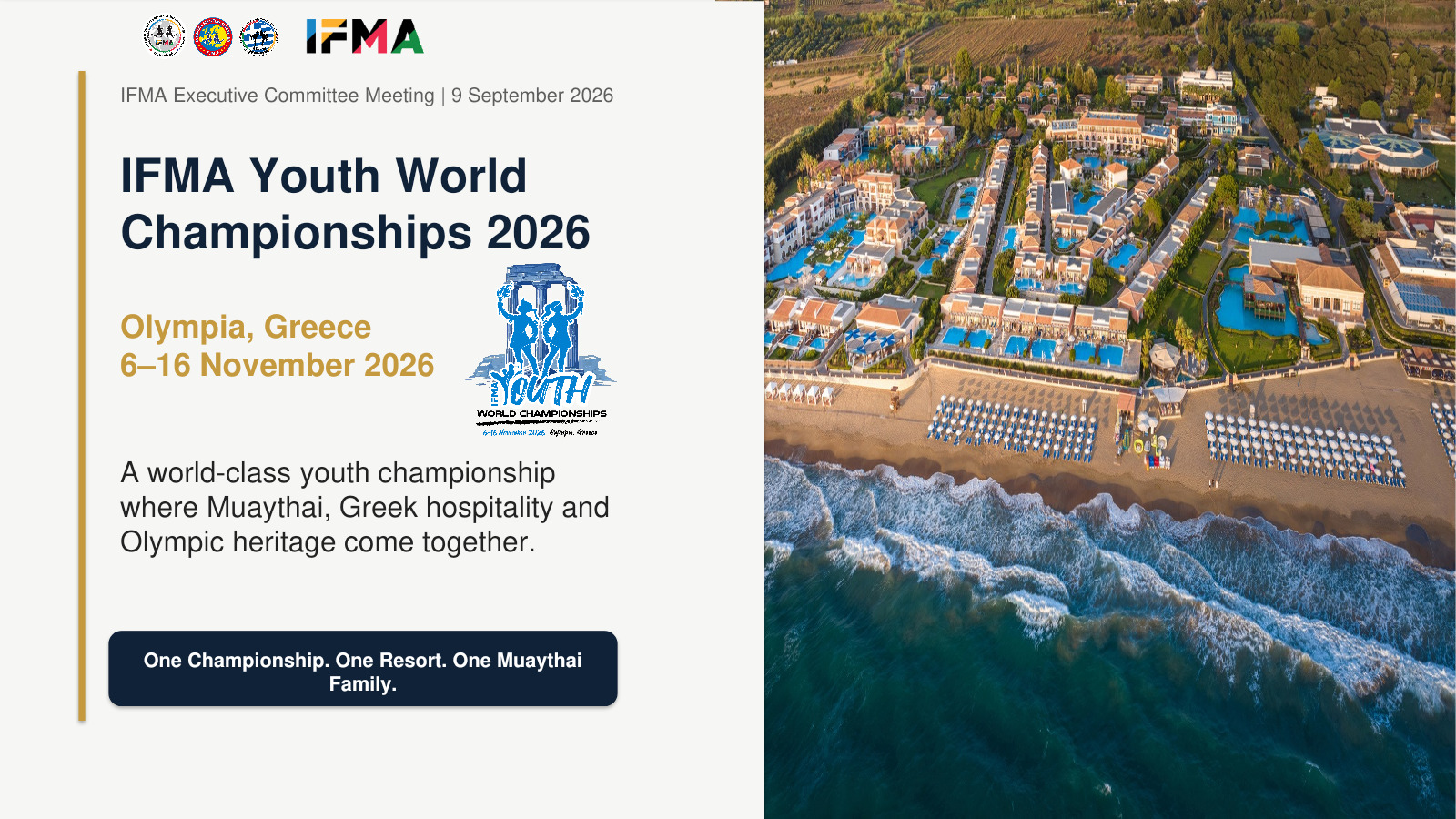
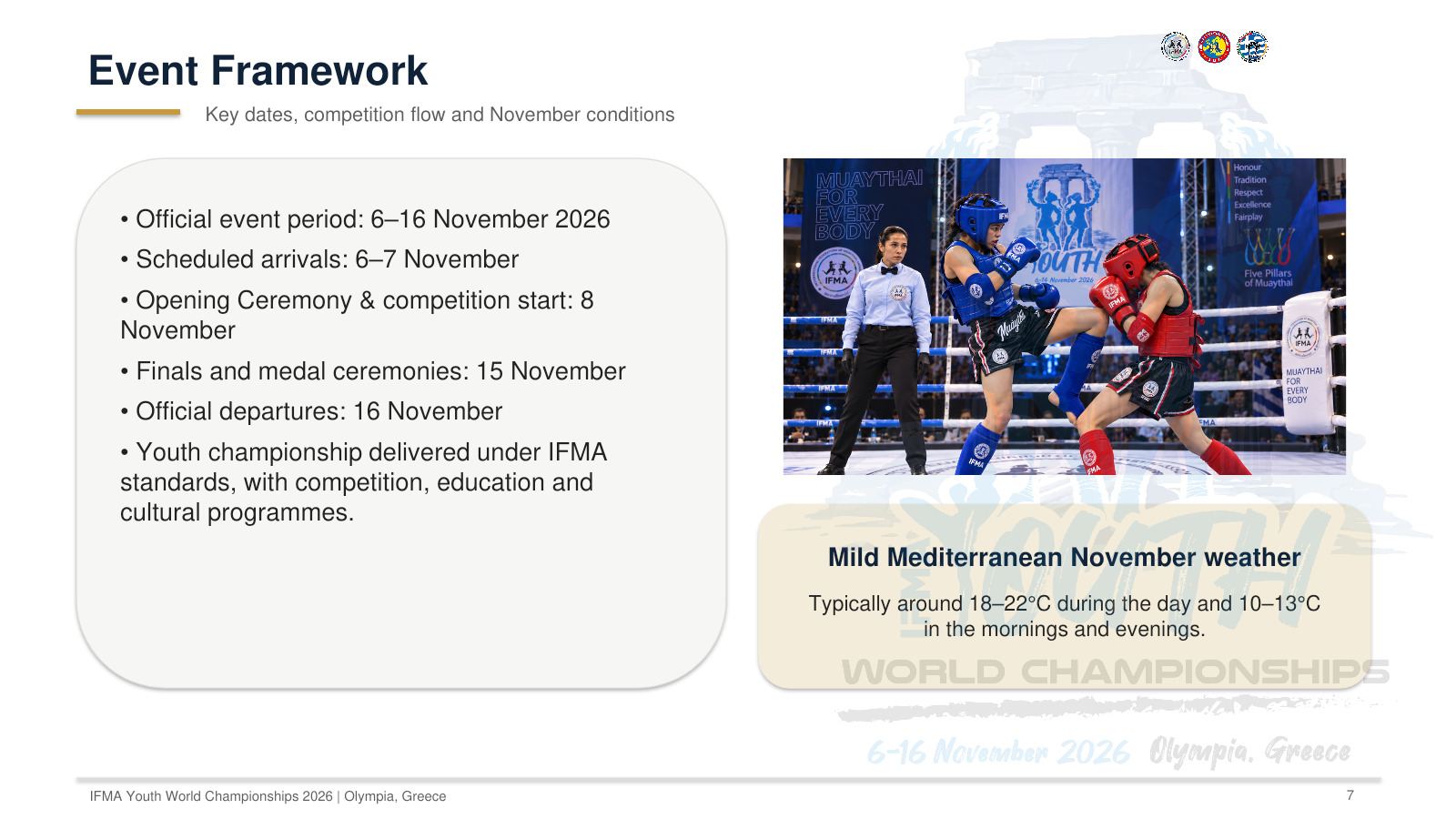
The following years brought remarkable progress. IFMA gained recognition from the Olympic Council of Asia, FISU, and an increasing number of National Olympic Committees and Sport Ministries worldwide. Muaythai became part of prestigious multi-sport events, including the World Combat Games and The World Games, while IFMA's Youth World Championships grew into the world's premier youth martial arts event, inspiring thousands of young athletes from over 100 nations each year.
Committed to excellence beyond competition, IFMA has championed athlete safety, clean sport, and social responsibility. Since 2012, it has served as the only World Anti-Doping Agency (WADA)-recognised anti-doping organisation for Muaythai. Through initiatives promoting peace, education, inclusion, and gender equality, IFMA has demonstrated the power of sport to create positive global change, earning the prestigious Spirit of Sport Award in 2016.
The greatest milestone came in 2021 when the International Olympic Committee granted Muaythai and IFMA full IOC recognition, fulfilling a vision that began nearly three decades earlier.
Today, IFMA unites 148 National Federations recognised by their highest sporting authorities and National Olympic Committees. More than a governing body, IFMA has become a global movement—honouring the traditions of the Kingdom of Thailand while inspiring millions through excellence, unity, respect, and cultural pride.
In 2026, IFMA reached two more historic milestones. The first Military Challenge Competition was successfully organised under the patronage of the International Military Sports Council (CISM) in Bangkok, further strengthening Muaythai's presence within the international military sports community. In the same year, IFMA, in partnership with the International School Sport Federation (ISF) and the Persatuan Muaythai Malaysia (PMM), successfully launched the inaugural Schools Muaythai Championship, expanding opportunities for the next generation of athletes through school sport.
These achievements reflect IFMA's strategic vision and strong global partnerships. Under dedicated leadership, IFMA continues to build bridges across the international sporting community, advancing Muaythai's development while strengthening its position as one of the world's most respected martial arts and recognised sports.